The 2024 Berkeley Fisher Center Business Analytics & AI Summit ran on 4 December at Berkeley Haas, in the Spieker Forum, under a title that dates itself precisely: The New GenAI Deal: Reboot, Reshape, and Re-invent the Future of Business Analytics. Gauthier Vasseur, the Center's executive director, had assembled a programme to match. Christine Kingsley from Google, Raj Pai from NASA Ames on the future of airspace operations, analytics leads from Allianz Partners, Havas and the Association for Financial Professionals, and an academic panel called "Fast Forward 10 Years in AI: The Good, the Bad and the Ugly". One case study came from a steel mill.
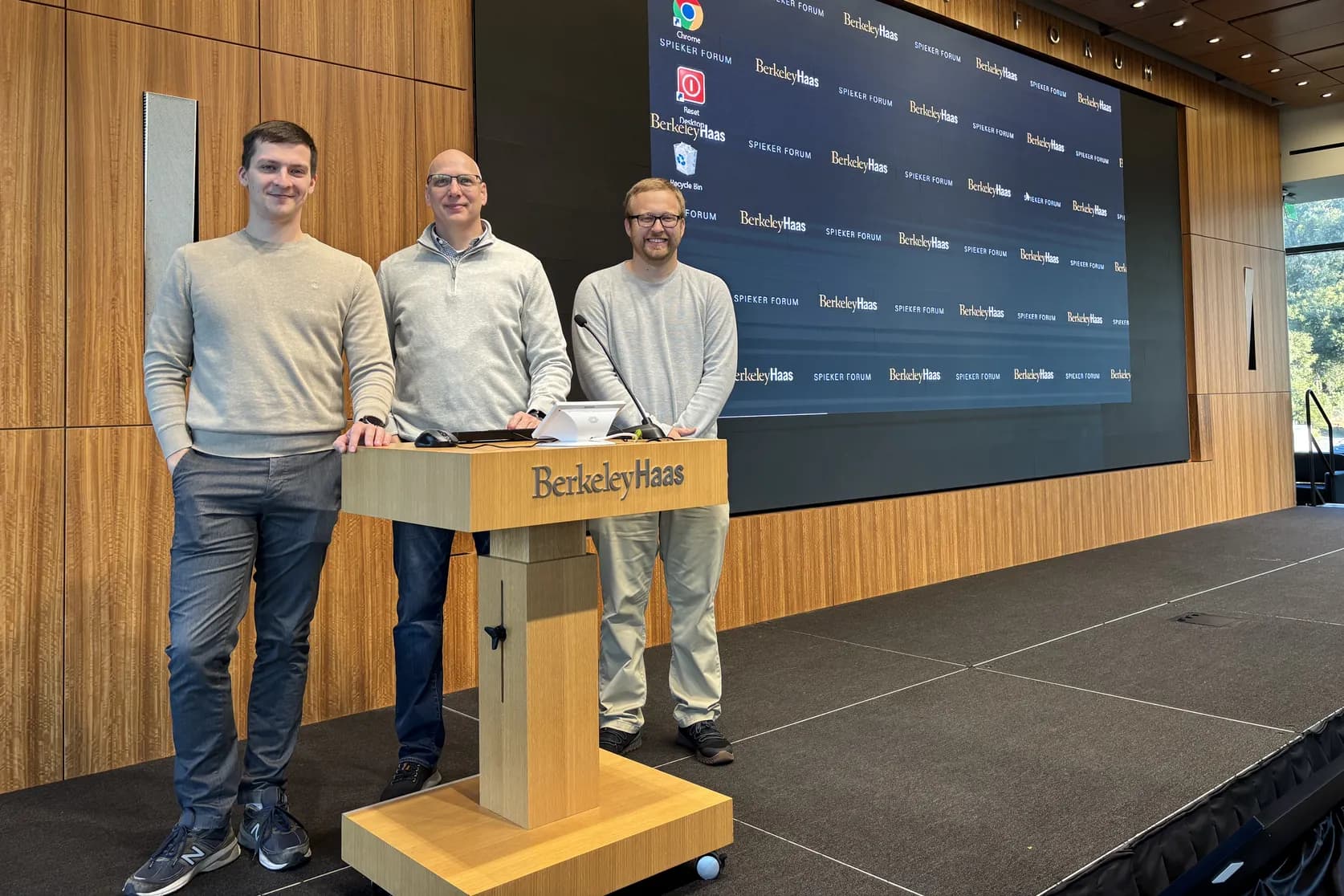
That case study was North Star BlueScope Steel, which had two slots on the programme: a keynote from Joshua Guest, their Head of Technology, and a panel seat for Steven Chaney, their Head of Digital Systems. Metal Minds is North Star's AI partner on the materials models, and Guest introduced me from the stage as exactly that, so I was listening with more at stake than the average attendee.
A mill in an analytics room
Much of the day was about making advanced analytics reachable by people who do not write code. A melt shop starts from somewhere else. Nobody at a mill struggles to reach a model; the trouble starts after the model answers, because the output has to survive contact with a furnace. A charge mix wrong by a few kilos of copper becomes an off-grade heat, sold at a discount or diluted away. An energy figure optimistic by a few kilowatt hours per tonne turns into refractory wear and a tap temperature nobody wanted. The feedback arrives late, and it arrives as money.
Guest recalibrated the room in his own way, opening by asking it to guess the most recycled material in the world. It is steel, and North Star is an electric arc furnace mill built on that fact: post-consumer scrap comes in, gets sorted, and only true waste leaves for landfill. He claimed the lowest carbon footprint for steel made in the United States, roughly ten times lower than integrated imported steel. BlueScope, the parent, is headquartered in Australia and operates across Australia, New Zealand, China, Southeast Asia and North America; North Star itself serves automotive, manufacturing, agriculture and construction. All of that came before the first mention of AI.
Culture first
Guest's keynote was titled "Leveraging Company's Culture to Drive Digital Transformation in The Age of GenAI", and the slide behind him as he spoke was North Star's own operating values (people and safety, customer focus, technology) rather than an architecture diagram. The session's introduction had joked that the hard part these days is not GenAI but PowerPoint, and the day obliged: Guest's company video refused to play, and he asked the room to use their imagination.
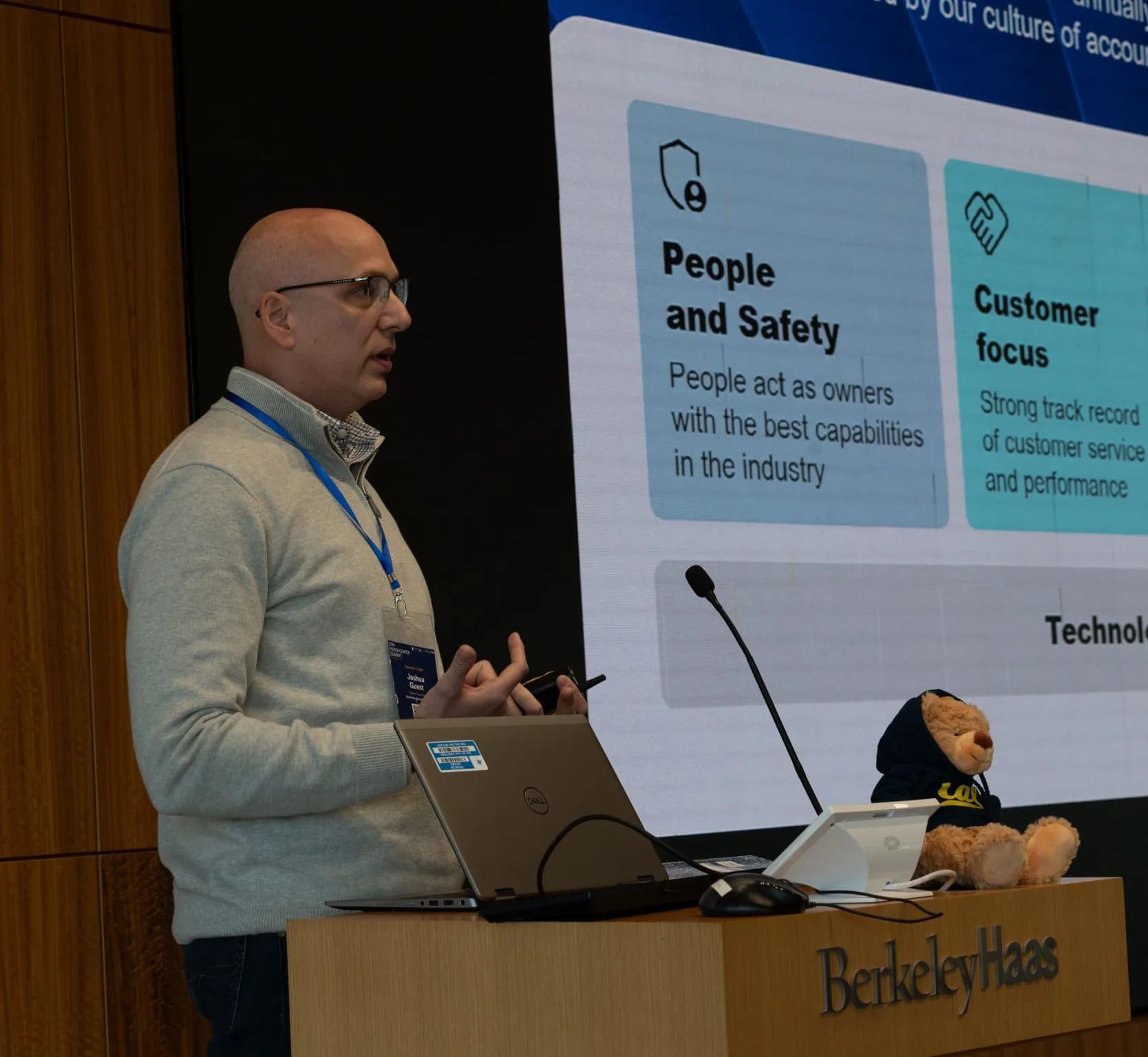
The ordering on that slide was the thesis of the talk, and he spent the opening stretch entirely on how the mill runs. Three areas, each running itself, each having solved its own technical problems with tools the technology group provided. Compensation tied to safety, operational metrics and continuous improvement. Employees described as owners, empowered and expected to pick up new tools themselves, with internal AI training sessions to match. Annual customer surveys rating North Star first in the United States for service.
It would be easy to file all that under management prose, except that he then showed where it lands. Non-technical employees at North Star have written Python and automated processes on their own, including an oil reconciliation that used to consume four months of every year. That is the culture argument arriving as a result rather than a claim, and it is the fact I have repeated most often since. A recommendation a crane operator does not believe gets overridden, and an overridden model earns nothing; North Star's answer is to make the operators the people holding the tools.
Guest was open about his own starting point, too: he used ChatGPT personally, drafting job descriptions and cleaning up his own performance reviews. Start small, he said, and meant it.
What is already running
The first system he described starts from a plain fact of the process: water and molten metal must not meet. Keeping them apart means spotting water where it should not be, and the visual tell is steam, which looks a great deal like smoke. That is a fast, repeated judgement, exactly the kind worth automating, and they are training a camera model to tell the two apart, expected live within about a month of the talk.
The second is order automation. Purchase orders used to be keyed in by hand, three to five minutes each, hundreds a week. They now ingest orders digitally, distil them with a large language model and emit a format their system can consume. It was working at the time of the talk, and he was explicit that it is not perfect, that training models takes time, and that part of the job is making the business comfortable with that. He said he keeps hearing that AI "is magic and should just work", and that it is not the case; from a client on a GenAI summit stage, that sentence is worth the trip.
The scrap models
Then the part closest to home for us. Two pressures sit on the mill's raw materials. Pig iron is expensive, and there is never as much of it on the market as buyers would like. Post-consumer scrap is under price pressure of its own, because more mills are switching to electric arc furnaces and bidding for the same material. On top of both sits chemistry uncertainty, and the safe response to uncertainty is to overcompensate what goes into the bucket, which means paying for alloy and iron the heat did not need.
That overcompensation is the target. Their models combine what has been bought, what is actually on the ground and post-process chemical analysis, and predict what to charge, replacing the padded charge with a calculated one. Around the optimiser sit three related models: scrap buying for the shredders at a sister company, scrap buying at North Star itself, and what to charge at what price. The effect on the charge mix has been substantial, and the mechanism travels better than any figure: the mill stopped buying insurance in the form of pig iron and started buying information instead.
What comes next
One idea was presented plainly as a concept, not a system: a retrieval augmented generation assistant for the ladle. The metallurgists who know what to add, and what not to add, carry twenty-five years of experience and are not always on the floor, while alloys such as nickel and titanium are expensive to add. The intent is a model that watches the key metrics continuously and gives newer operators recommendations grounded in metallurgical literature and captured plant knowledge.
The other open front is scheduling. Guest has been at North Star seven years and calls scheduling the mill one of its hardest problems: equipment failures, reacting to events in the mill, and the order book itself, where nothing is made to stock and every order is specific to a customer or an application. He wants it automated for a blunt reason: a human cannot do the computation in the time available.
He closed on the note the summit's title was straining for: AI is not the future, it is already here, and the question is how to use it to strengthen employees rather than replace them.
The panel
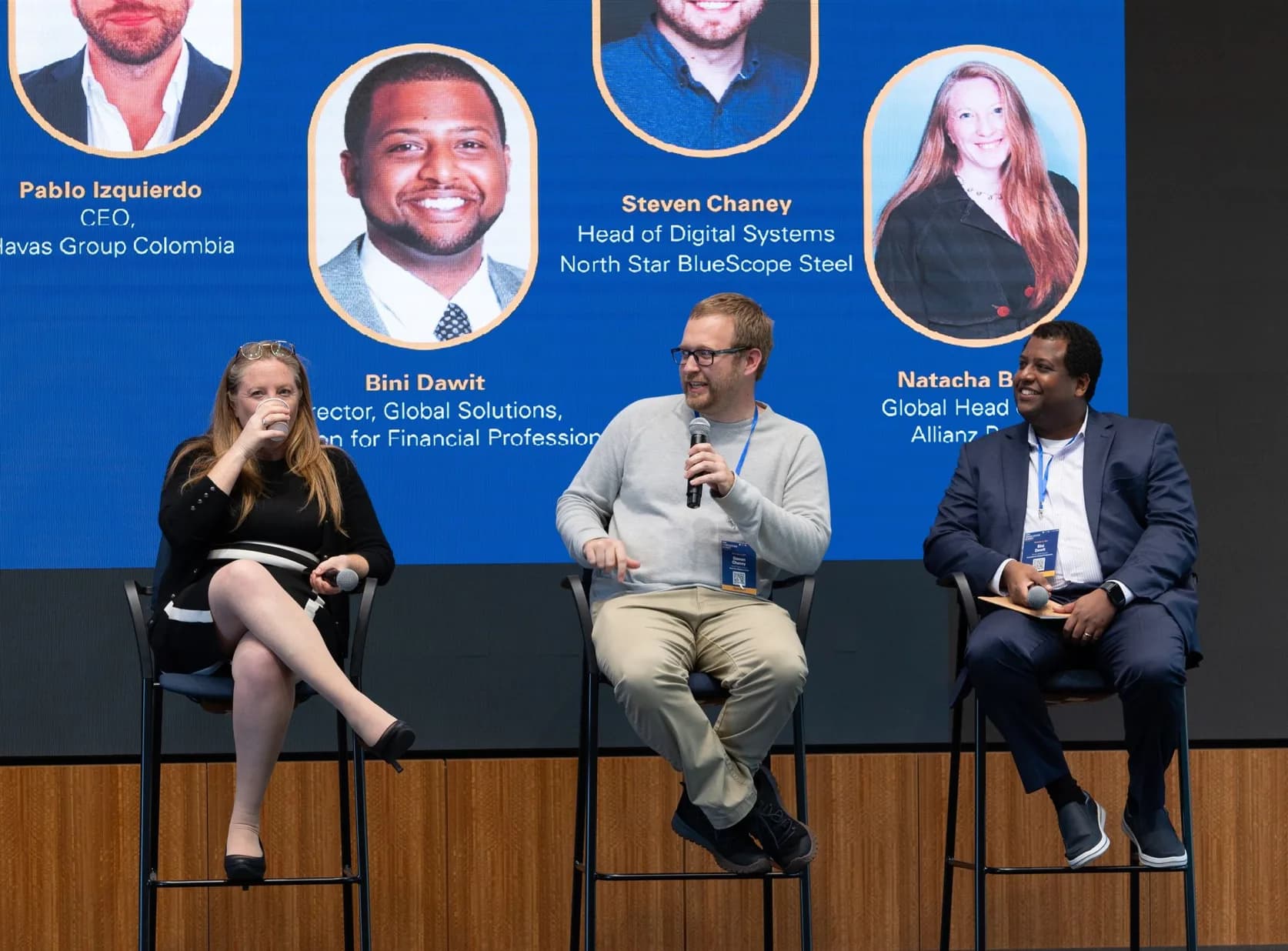
Chaney's panel, "Approach to Transforming Your Organization in the GenAI Era", seated him with Bini Dawit of the Association for Financial Professionals, Natacha Bouaziz of Allianz Partners and Pablo Izquierdo of Havas Group Colombia. Corporate finance, insurance, advertising and steel, all facing the same transformation question with four different ideas of what an expensive mistake looks like.
Afterwards
North Star's note, posted that week:
This week, we had the privilege of participating in the Berkeley Fisher Center For Business Analytics & AI Summit, where we shared our success in implementing AI innovations in the steel industry. Digital technologies have enhanced our competitiveness, driving both financial and environmental improvements. Special thanks to our trusted AI partner, Sasha Malakhov, founder of Metal Minds.
Ours was terser, and reading it back now I would have given it another sentence or two:
We're proud to have shared our AI-driven advancements in steelmaking. Special thanks to our client North Star BlueScope Steel for their continued trust and partnership.